
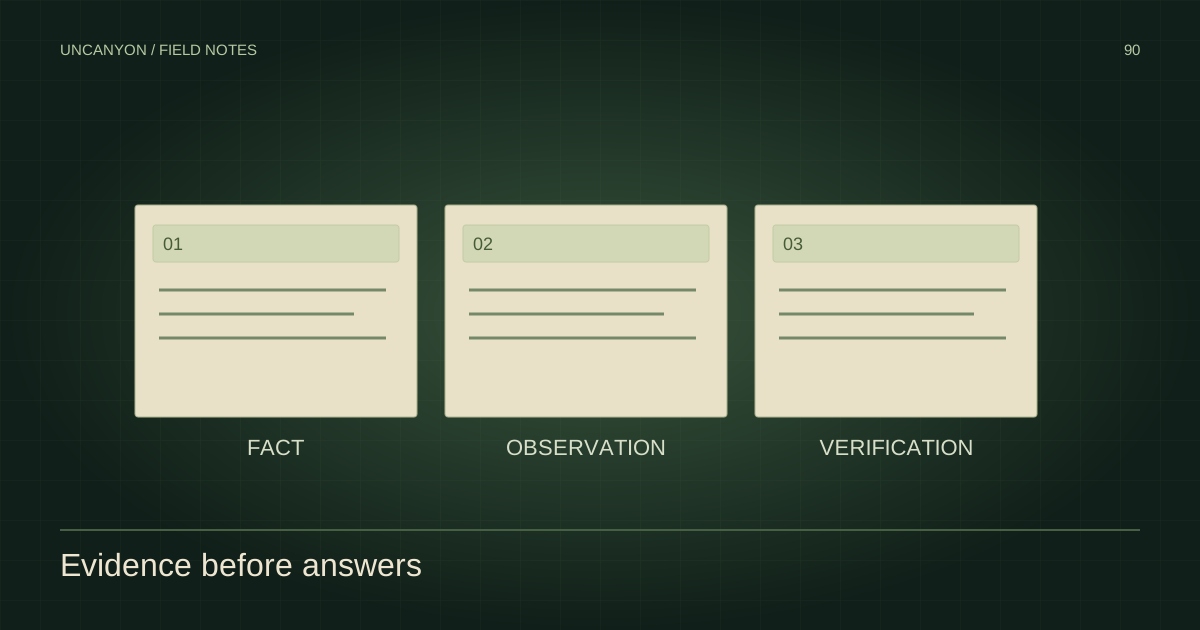
Our editorial process keeps official statements, interpretation and verification distinct.
Label the evidence
Official sources means the claim is grounded in developer, publisher or store material. Media interpretation means a secondary source is explaining what it believes the mechanic does. Editorial analysis means we are interpreting public material. Awaiting details means the evidence is insufficient to provide the promised location or solution.
These labels describe the article’s basis, not a guarantee that announcements cannot change. Purchase-time details should be checked against the latest official listing.
Do not invent a guide to fill a page
We do not create fictional region names, puzzle titles, map routes, item totals, achievement conditions or completion times. Provisional region slots exist to prepare navigation. Their numbers are editorial identifiers and their pages stay out of the search-engine sitemap until there is distinct useful evidence.
Alternate cuts of the same reveal trailer are available for readers but are not promoted as separate gameplay discoveries.
Make playable advice reproducible
A future guide must identify the platform, build, objective, prerequisites and steps used to verify it. Demo and retail information remain separate. A patch that changes a route should trigger a review of related pages, rather than silently leaving old instructions marked current.
Protect the discovery
Guide headings should name the reader’s problem without revealing unrelated story outcomes. Strong hints and complete answers belong in labeled disclosures. Videos and maps should display a spoiler level before the reader opens them.
Corrections and dates
The site distinguishes its article publication date from the date of the event it describes. Source review dates are recorded separately. Use the correction report to describe an error and attach an original source link.